The $8.75 Junk-Journal Treasure Hunt: What a Library Sale and a Thrift Store Actually Get You
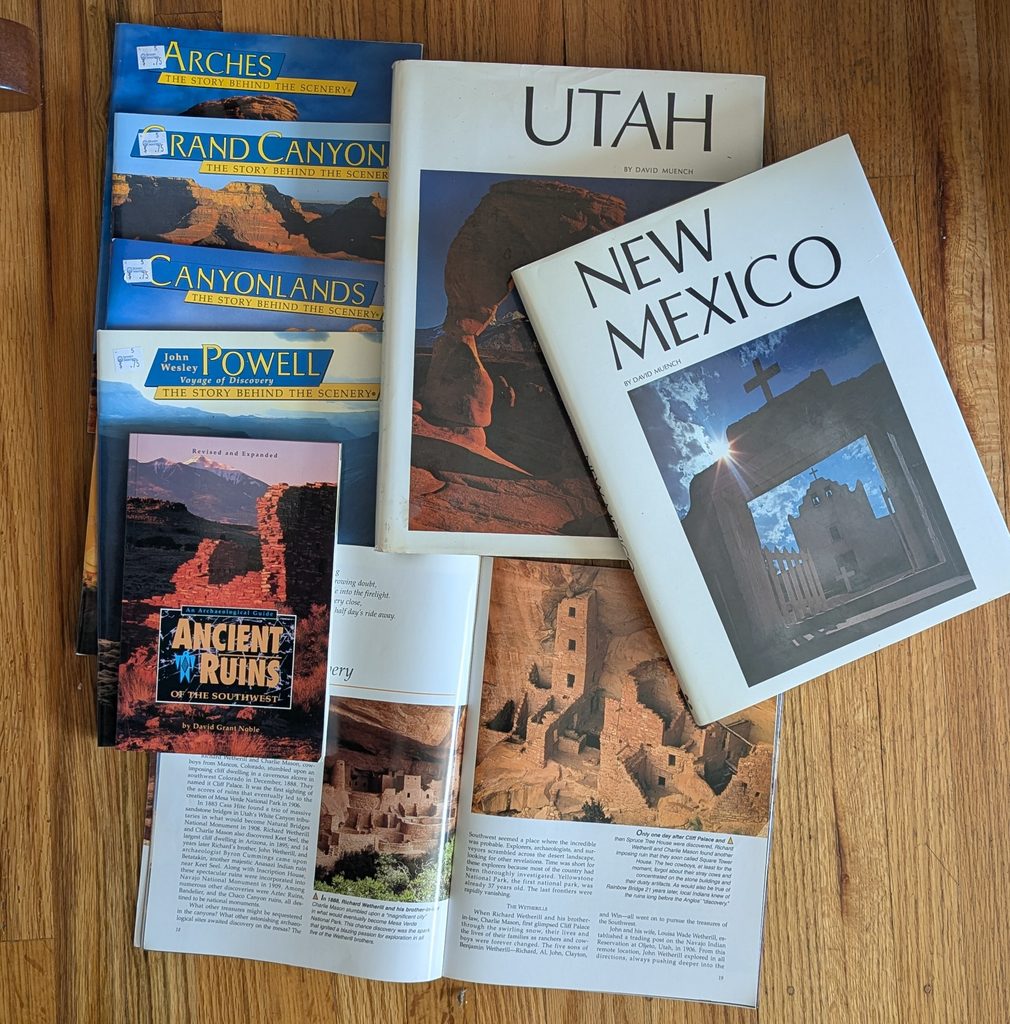
Here’s what $8.75 bought at a library sale and a local thrift store: two hardback state photography books, a full run of a national park mini-series, and an archaeology guide — enough source material for a serious ancient ruins pack, for less than a fast food combo.
The breakdown
- Utah and New Mexico, hardback photography books by David Muench — $2 each at a library sale
- Ancient Ruins of the Southwest by David Grant Noble, paperback archaeology guide — $1
- Arches, Grand Canyon, Canyonlands, and John Wesley Powell: Voyage of Discovery, all from the “Story Behind the Scenery” series — 75¢ each at a thrift store
That’s $8.75 for a stack that covers geology, regional history, a Colorado Plateau archaeology narrative, and enough large-format photography to fill a dozen journal pockets — with material left over for a Grand Canyon or Powell expedition pack down the road.
What each type of book actually gives you
The Muench hardbacks are worth buying for the photography alone — full-bleed, large-format images of exactly the kind of landscape and light a Southwest pack needs, shot by someone whose career was built on this region. The “Story Behind the Scenery” magazines are shorter and cheaper, but they’re written for a general reader and organized park-by-park, which makes them easy to mine for a single fact card or a pull-quote without reading a whole book. The archaeology guide is the one worth reading cover to cover — it’s where the actual narrative comes from, the kind of “in 1888, two cowboys chasing stray cattle stumbled onto Cliff Palace” story that turns a fact card into something a kid wants to read rather than skim.
From book to journal page
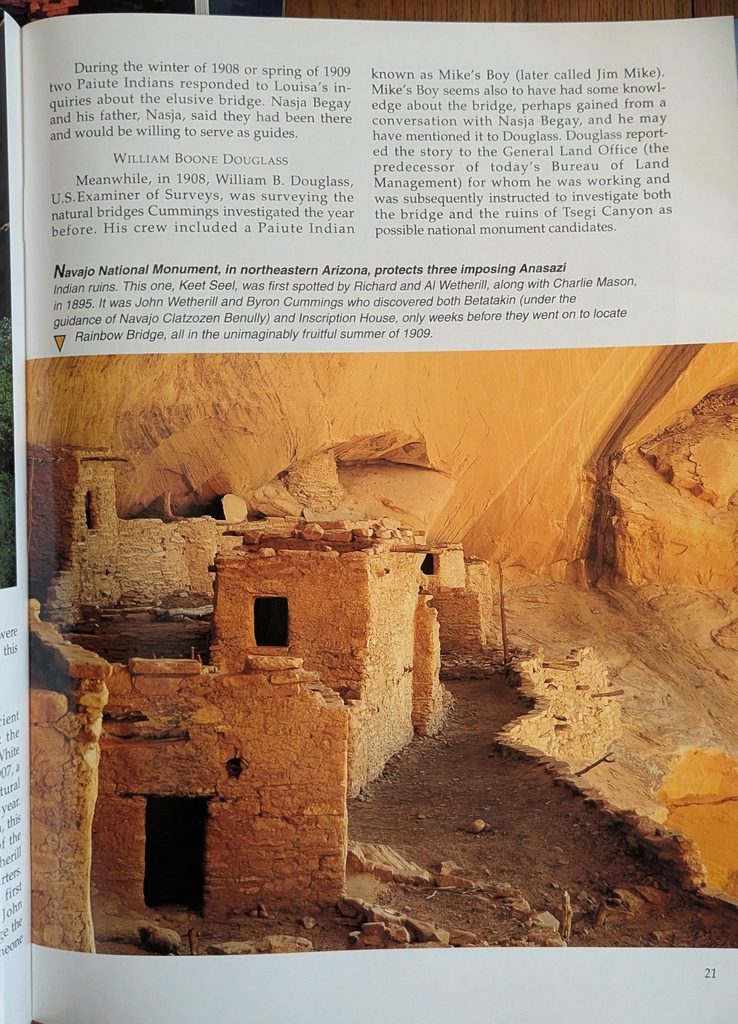
None of this stays a book for long. A page like this gets cut, folded, or photocopied and dropped straight into a pocket or glued in as a specimen card.
Why this works better than buying new
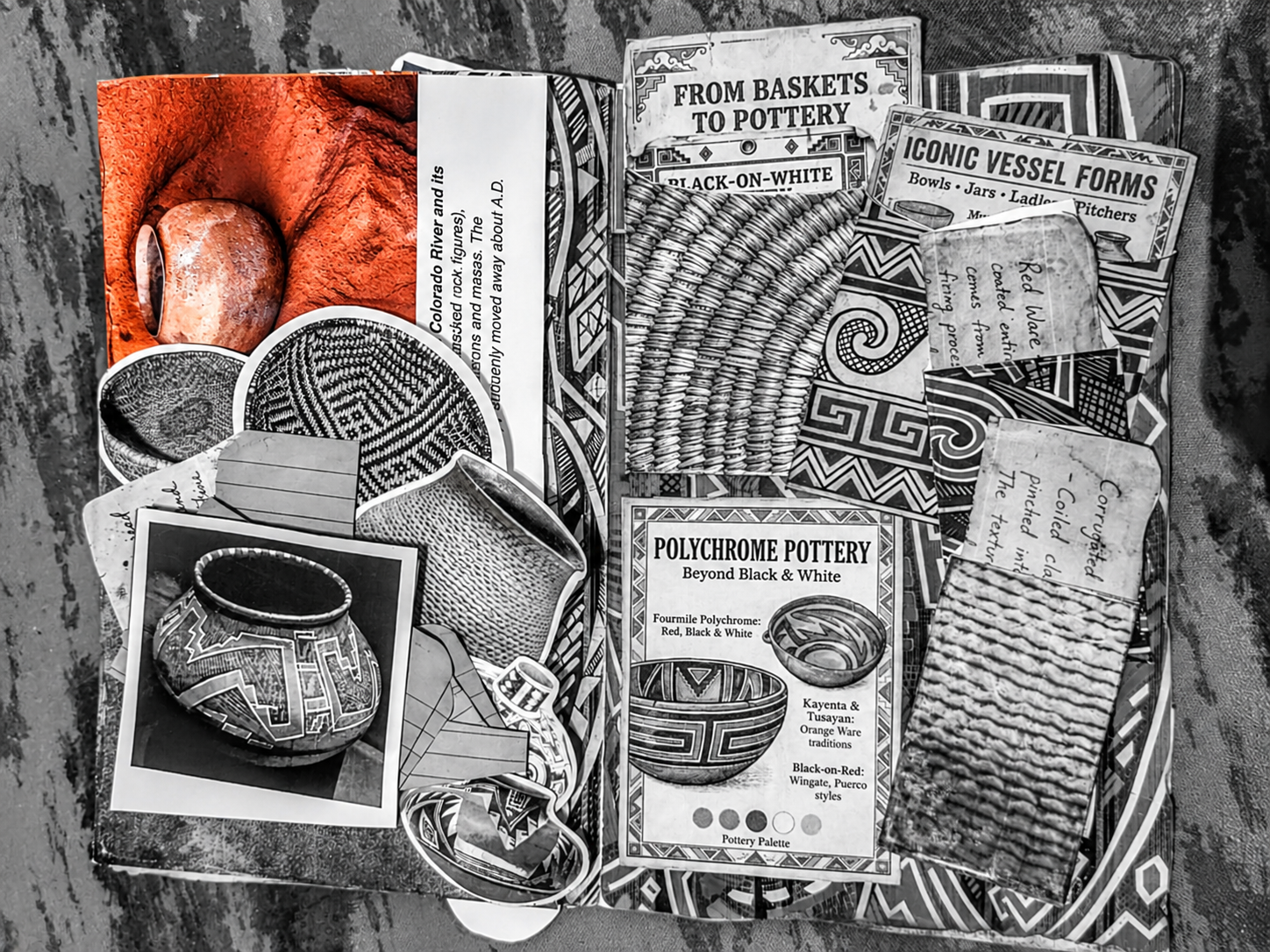
There’s a reason this matters beyond the price. New books written for kids are usually pre-digested — the interesting stuff has already been decided for you and handed over in bite-sized captions. A used adult photography book or an old archaeology guide hasn’t been simplified for anyone. Finding the one paragraph or one photo that’s actually useful for your pack means reading more than you’ll use, judging what’s worth keeping, and doing exactly the same kind of source-hunting you’re asking your kid to do with their fact cards and specimen pockets. You end up modeling the research the pack is trying to teach, not just supplying material for it.
It’s also just an efficient way to build a catalog. A new hardback runs $25–40. A used one, a year or two out from its splashy release, runs $1–3 at a library sale specifically because nobody’s paying for a coffee-table book of Utah photography anymore — but the images and the text are exactly as good as they were the day it was printed.
Where to actually find this stuff
- Library “Friends of the Library” sales — usually the best source for hardback state/regional photography books and out-of-print guides, often $1–3 each, and many libraries post sale dates months in advance
- Thrift stores — hit-or-miss for anything specific, but reliably cheap for the magazine-format “Story Behind the Scenery”-style series and old National Geographic issues
- Used bookstores — pricier than a library sale but better organized, worth it if you’re hunting a specific region or topic
- Estate sales — less predictable, but a good source for older, harder-to-find regional history books
What to flip to first, once you’ve got a candidate in hand: the index (does it actually cover your region/topic in depth, or just mention it), the photo plates (are the images print-quality and full-page, or small and busy with text), and the copyright page (older books are more likely to be out of the “trying to look kid-friendly” trap and just present the subject straight).
A reasonable price ceiling to keep in mind, going by this haul: aim to stay under $2–3 per book, and treat anything over $5 as something you’d want to be fairly confident about before buying.
It fits the road, too
None of this requires a special trip. A library sale or a thrift store is exactly the kind of stop that works between two other things you’re already doing while traveling through a region — pull off for twenty minutes, flip through the regional section, and you’ve either found something worth $2 or you haven’t lost much finding out. If you’re roadschooling or worldschooling through an area, it’s a natural way to pick up source material for whatever pack matches wherever you are.
A quick note on what this is (and isn’t)
To be clear: this is about what you can do with books you’ve personally bought and own — cutting, photocopying, or scanning pages for your own journal, for your own family’s use. It’s not a suggestion to lift images from someone else’s copyrighted photography into something you’re reselling. The whole appeal here is that a $2 book you own gives you material for years of your own journaling, not that the source material is free to redistribute.