We Started a Pack About the Ancestral Puebloans. Then the World Started Handing Us the Materials.
The Ancestral Puebloan pack was our first world expander, so we didn’t really know what we were signing up for. We figured we’d research a culture, write some cards, design some ephemera. What we didn’t expect was that a few weeks of research would change what we noticed on ordinary errands — a walk, a thrift store, a zoo gift shop — until we couldn’t stop finding the pack’s own materials, and its deeper science, in our own lives.
Clay, and an accidental lesson in material science
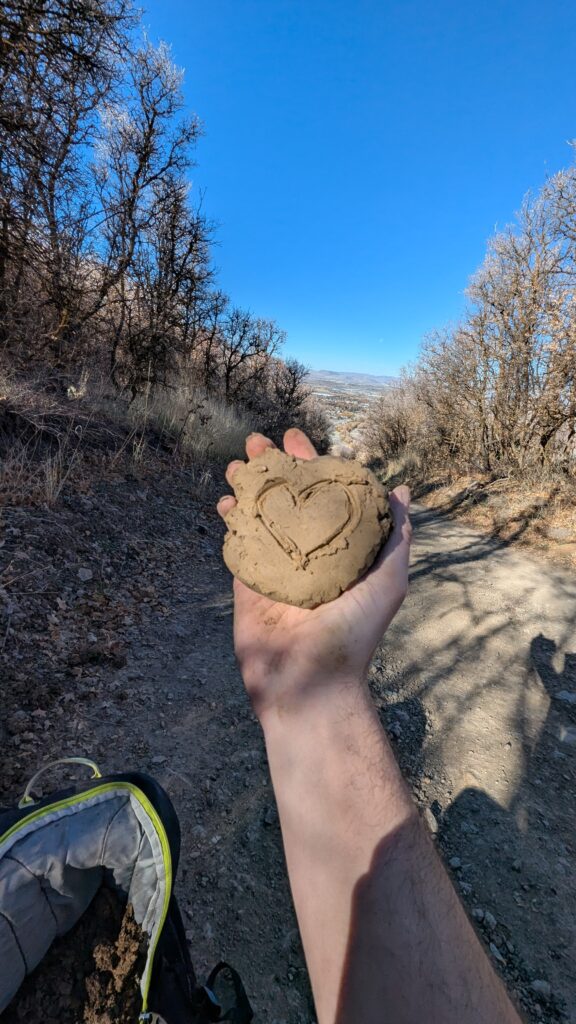
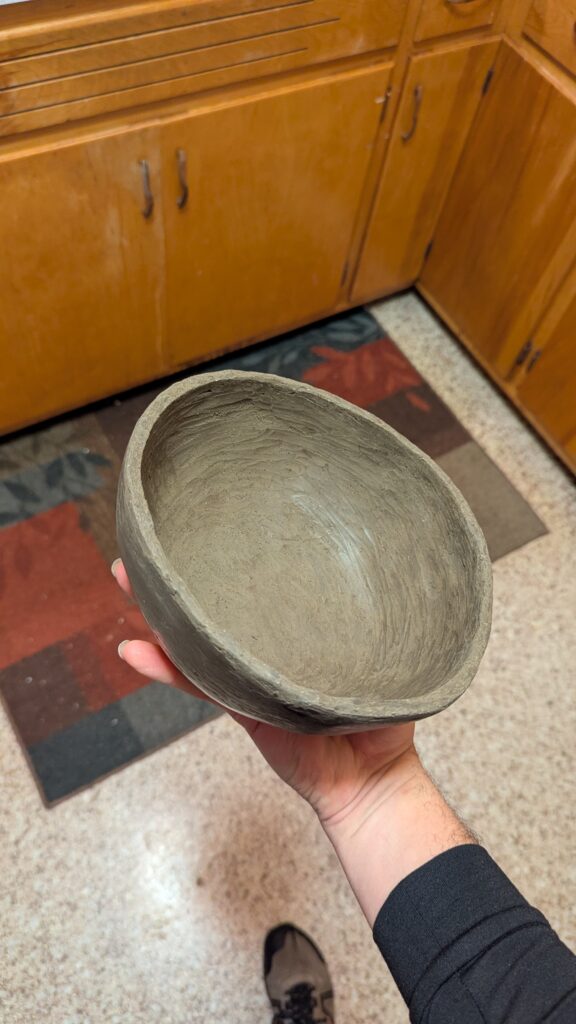
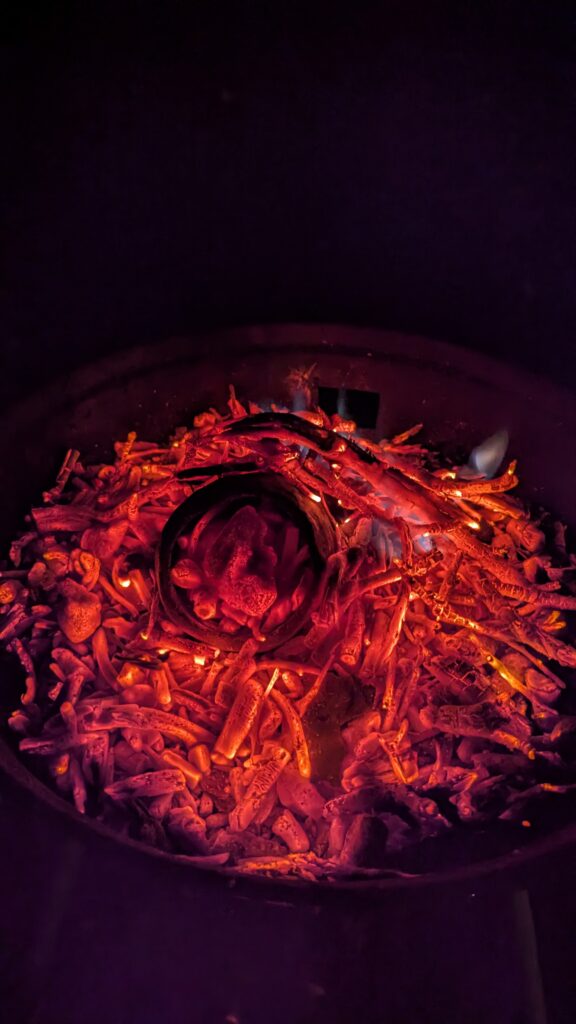
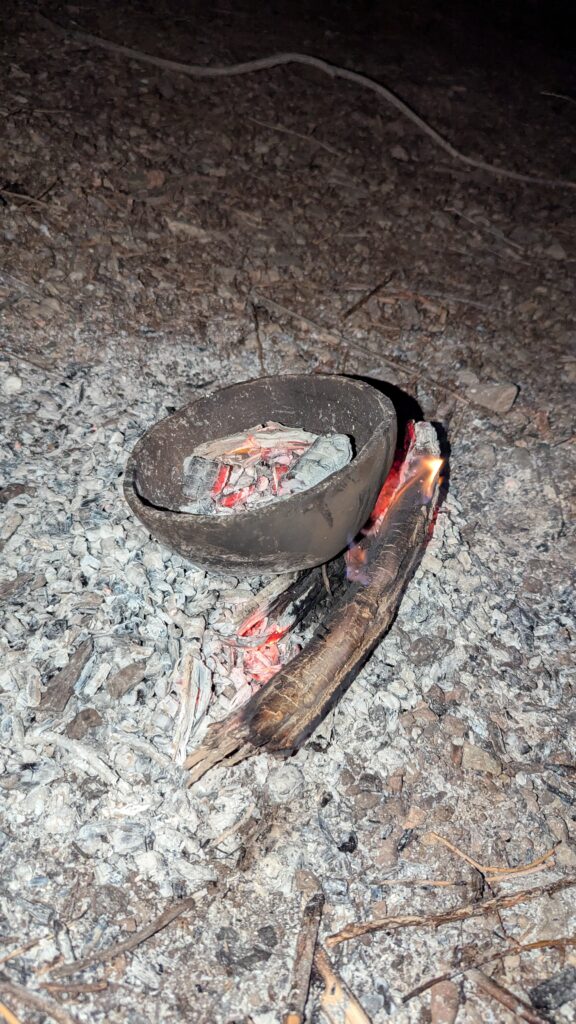
It started with pottery. Researching Ancestral Puebloan ceramics led us to Andy Ward’s Ancient Pottery series, where he shows how to find wild clay, process it, temper it with sand, and fire it in an open wood fire — the same basic process the Puebloans used centuries ago. Before this we wouldn’t have known wild clay from ordinary dirt. After, we started digging test pits.
We also learned the hard way why the sand matters. Our first pots kept cracking, both while drying and while firing, and chasing down why turned into an unplanned lesson in thermal expansion — clay and temper shrink and expand at different rates as they lose water and then heat up, and if the mix or the drying is off, the pot tears itself apart from the inside. The Puebloans tempering their clay with sand wasn’t decorative; it was load-bearing material science, and we only understood that once we’d cracked a few pots ourselves.
Ochre — or what we thought was ochre
Puebloan paint pigments sent us looking for red ochre. What we actually turned up was the yellow iron hydroxide form — geologically related, but not the reduced, dehydrated red version we were after. It was a small correction, but the kind you only make by going and looking for the real thing instead of just reading about it.
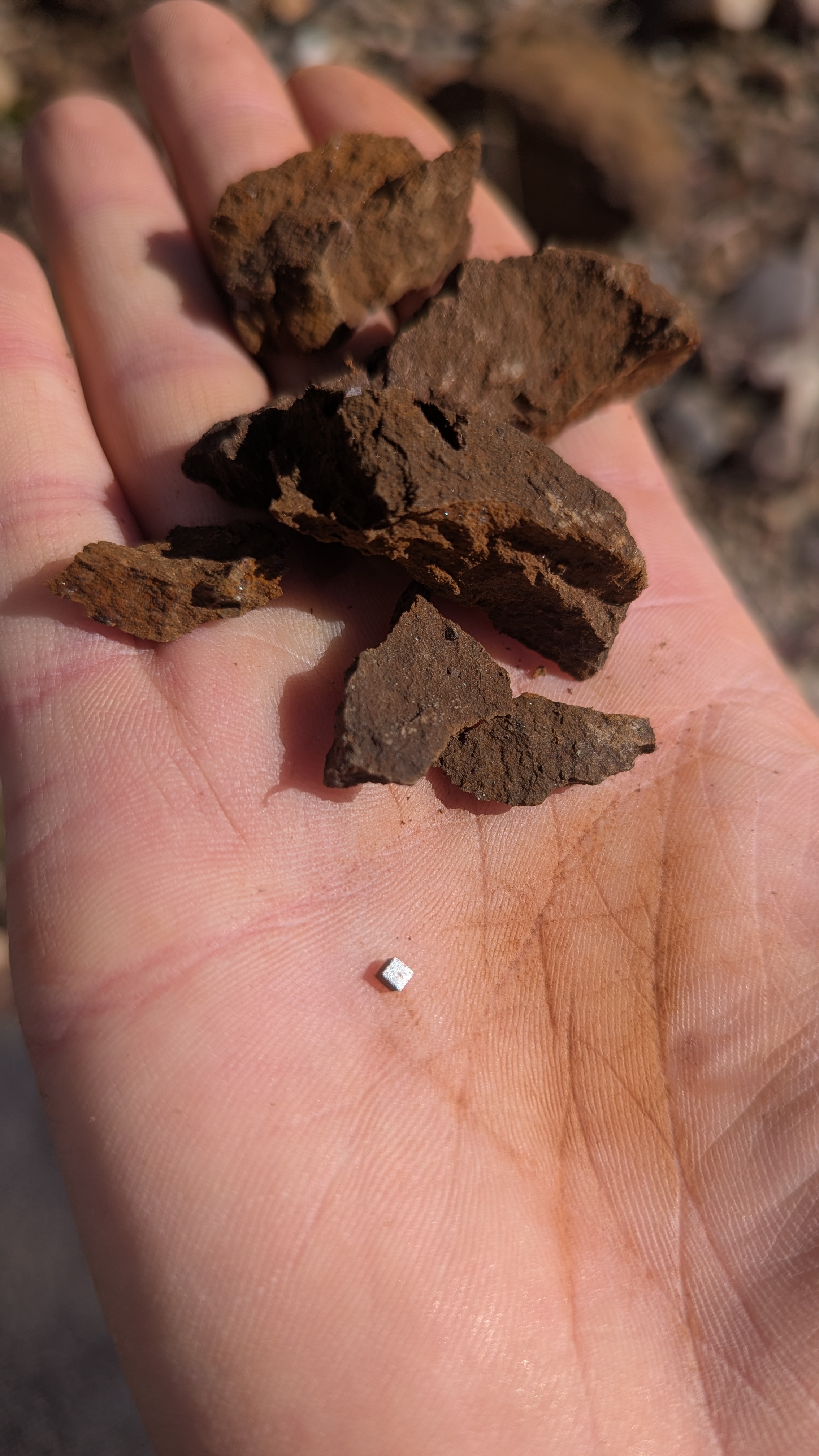
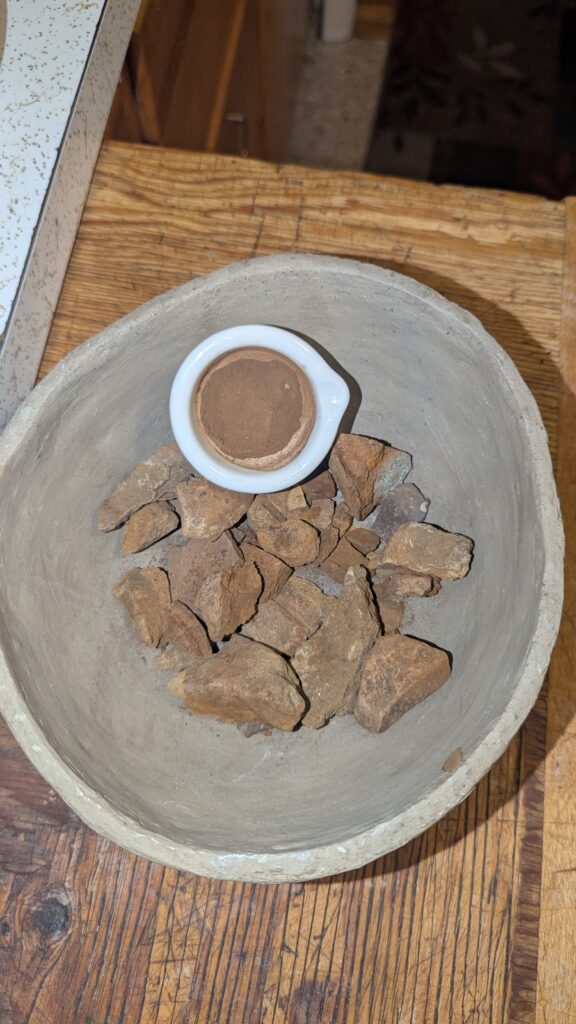
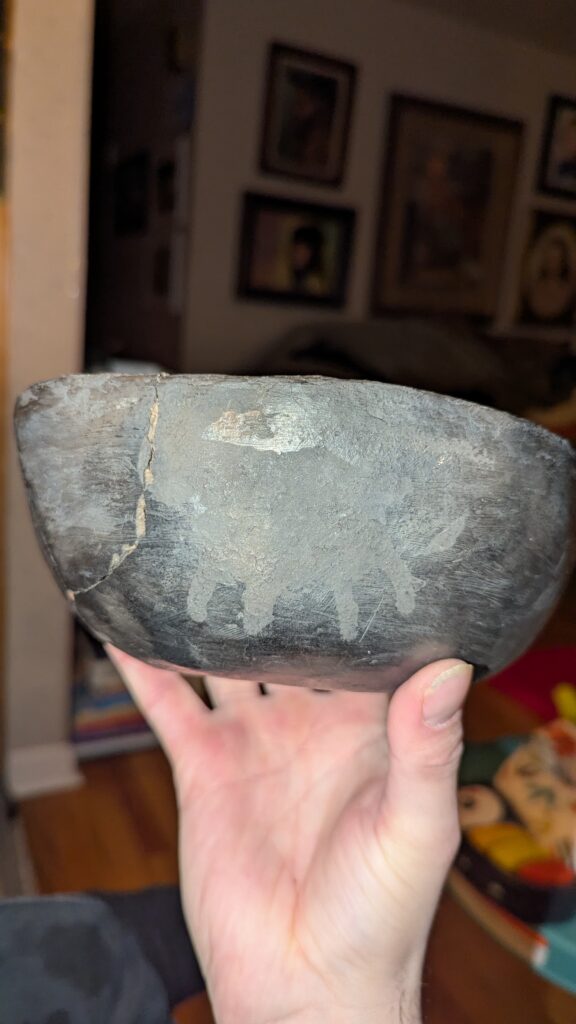
Obsidian in our own garden, chert on a walk
We’d read about obsidian and chert as tool stone, then found a piece of obsidian already sitting in our own garden — used, ironically, as a border stone along a flower bed, with no one in the household having any idea what it actually was until then. Not long after, we turned up chert on a walk, another tool stone the Puebloans worked heavily.
Yucca fiber — and dogbane and milkweed came with it
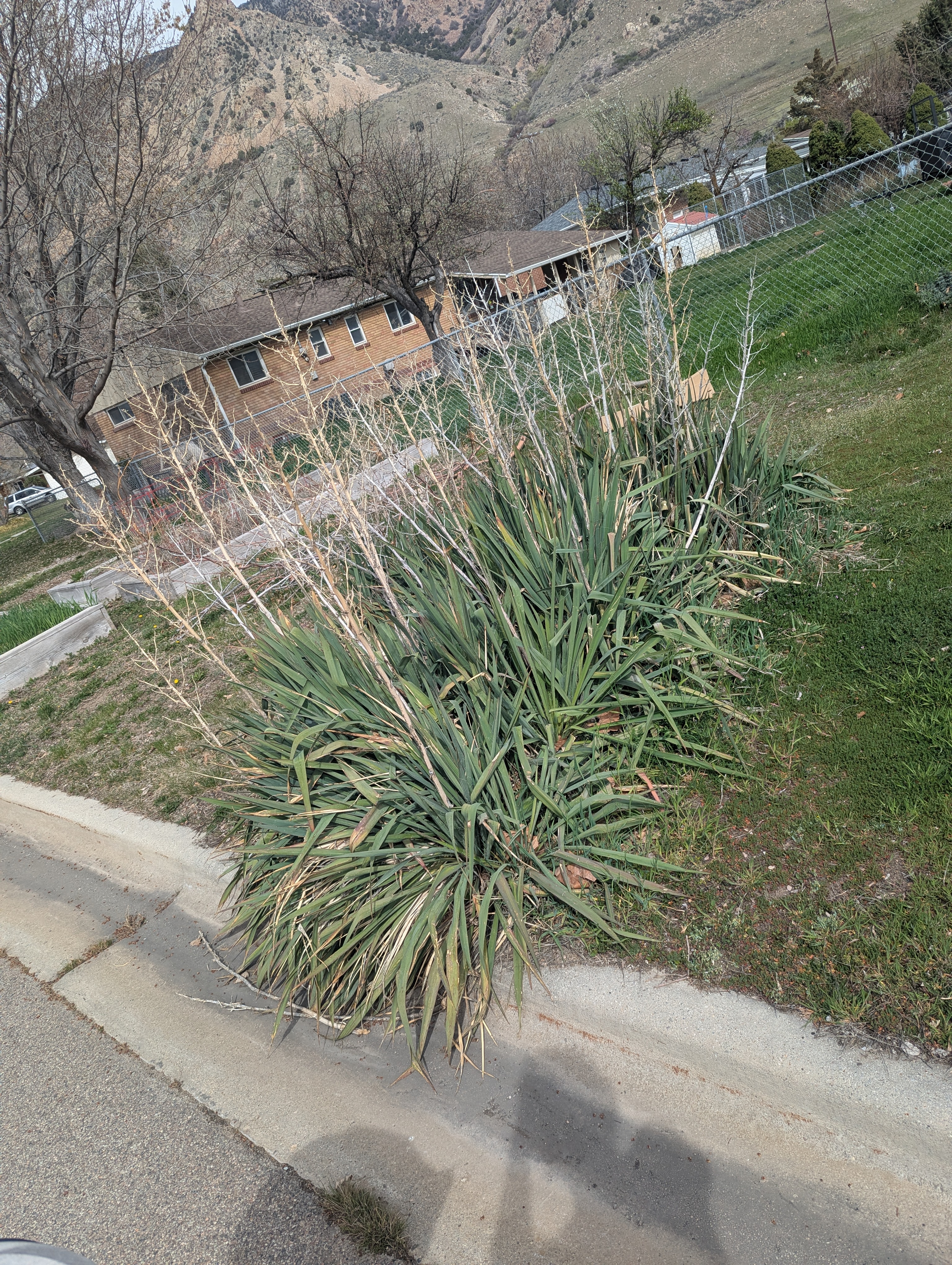
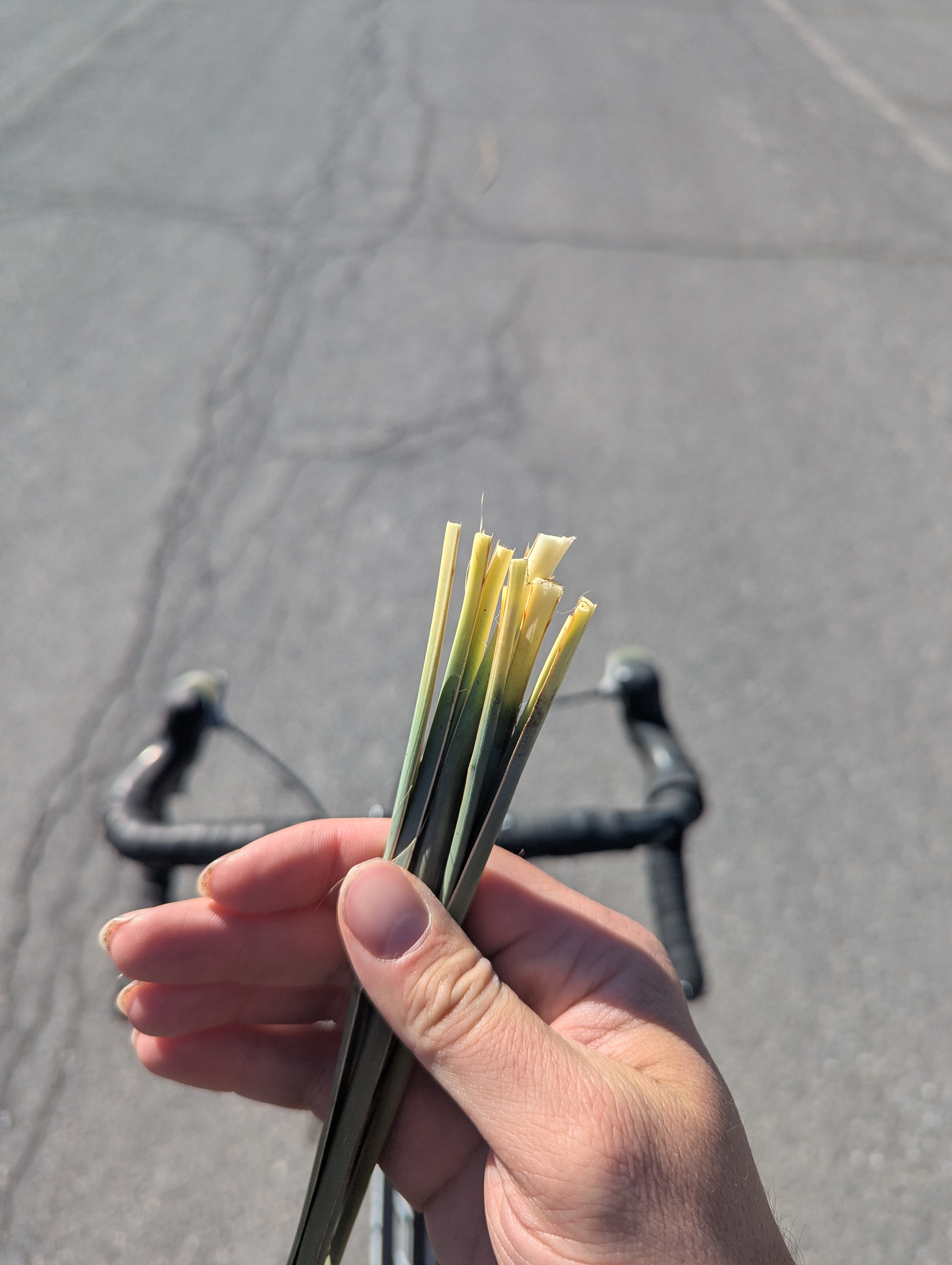
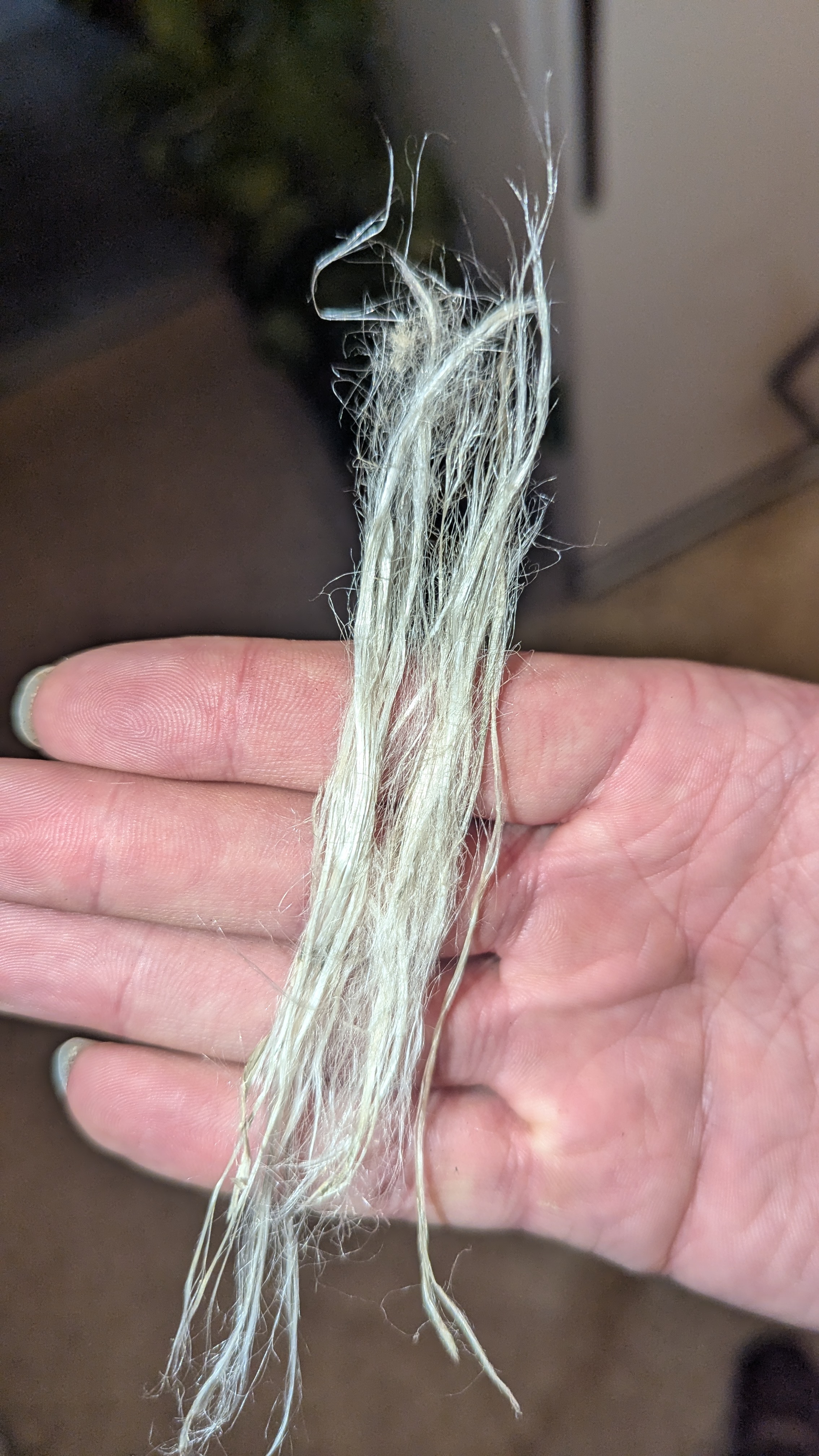
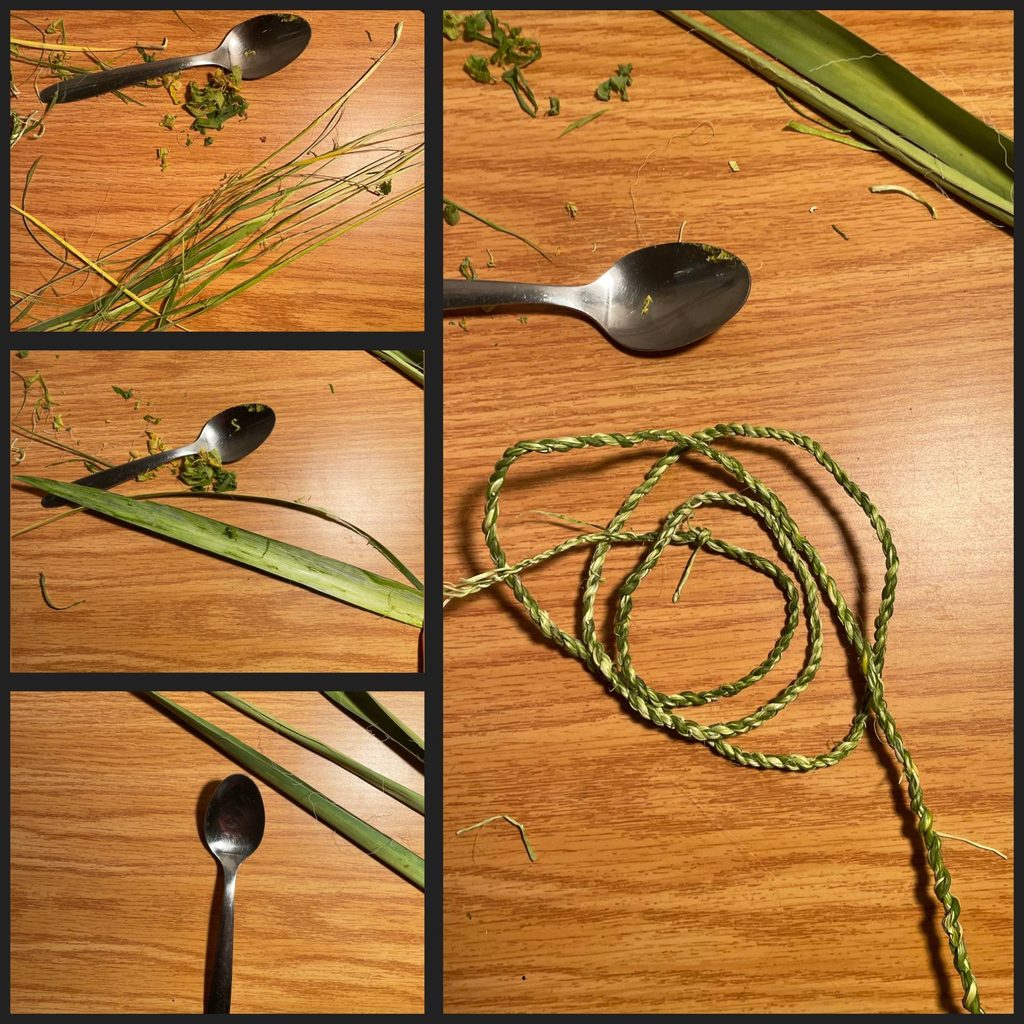
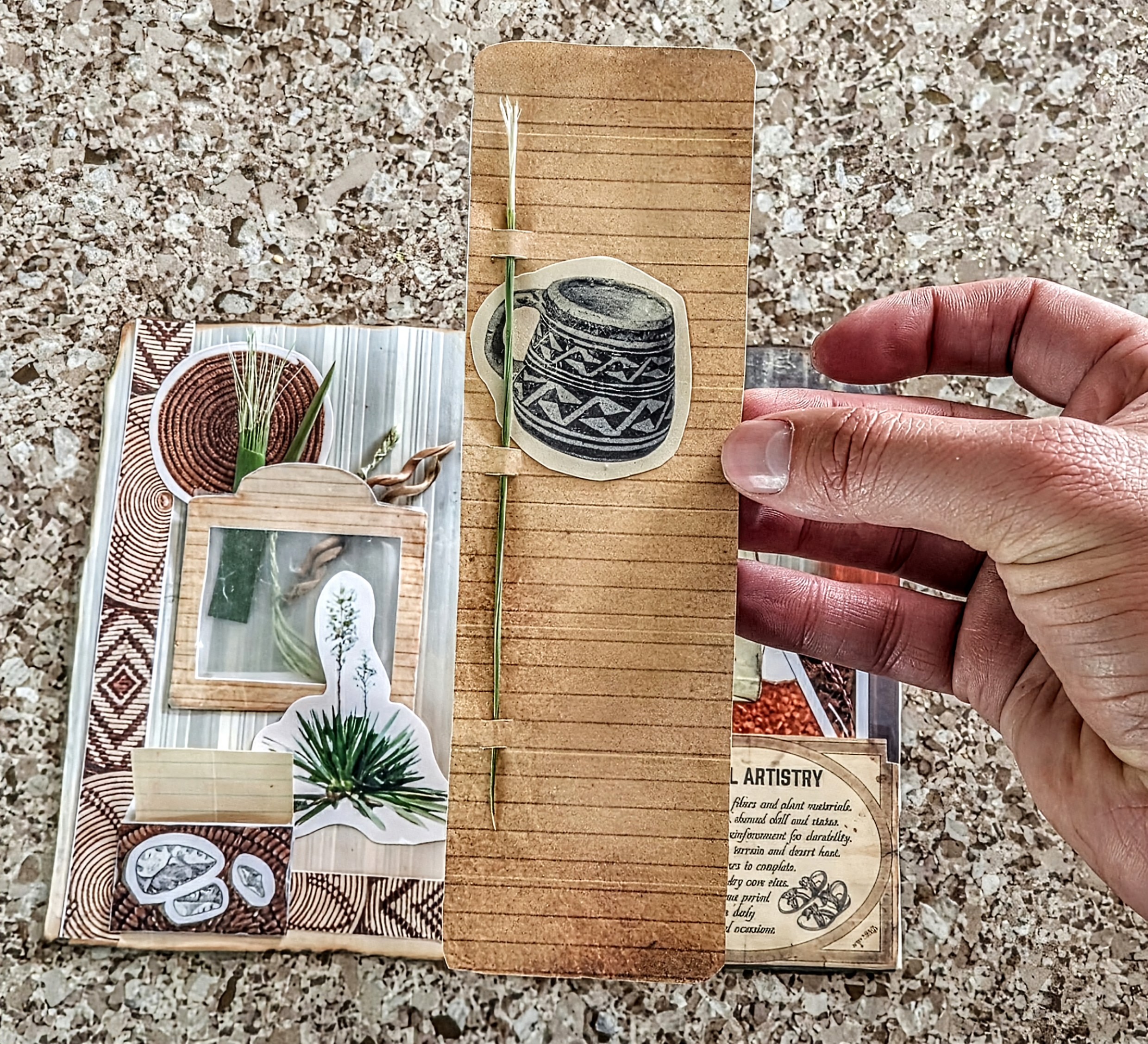
We read that the Puebloans twisted yucca leaves into cordage — nets, sandals, rope. Days later, on a walk near the house, we passed a stand of ornamental yucca we’d walked by a hundred times without a second look. This time it registered as a material, not a landscaping plant.
Chasing yucca cordage pulled us into fiber plants generally, and we came out the other side able to spot dogbane and milkweed — both of which produce usable bast fiber, and both of which the Puebloans likely had access to and used alongside yucca. None of that was in the original research plan; it just came along for the ride.
Real sherds, at a thrift store, for $25
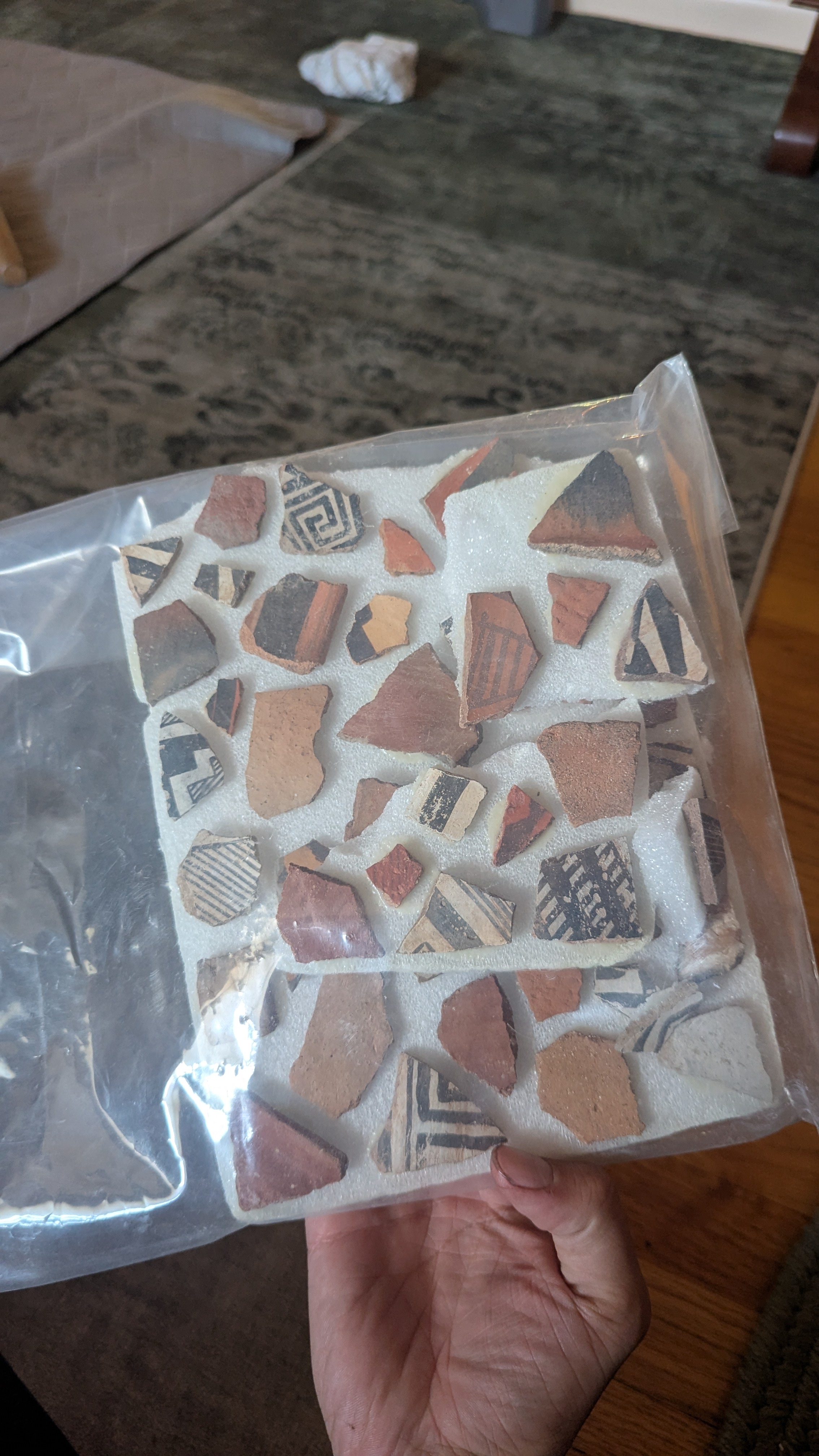
This one we didn’t go looking for. In a bin of odds and ends at a thrift store, we found what turned out to be authentic pottery sherds from the Ancestral Puebloan region — $25 for a handful of shards that are, by any normal measure, small artifacts. We wouldn’t have known to look twice a month earlier.
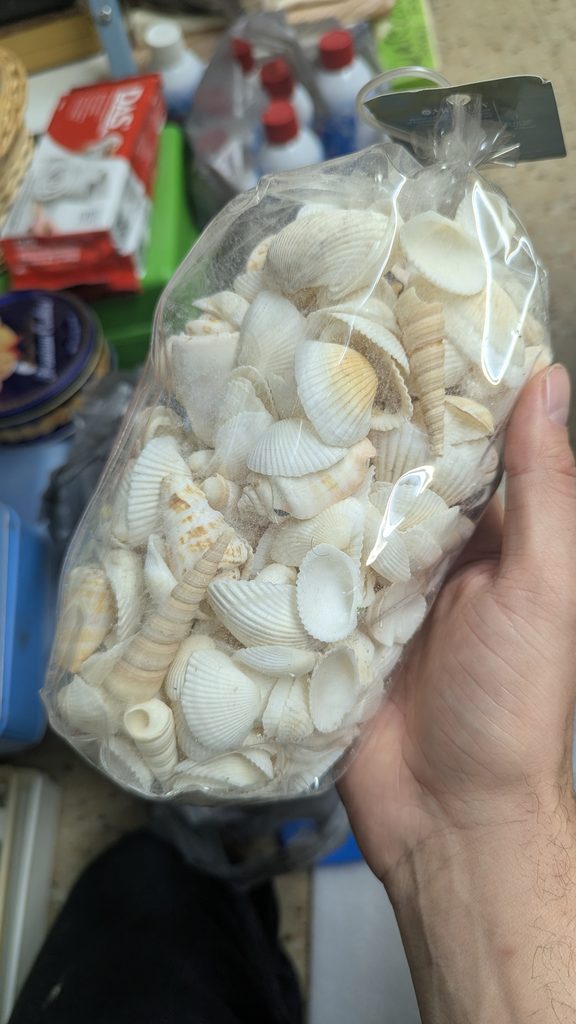
Shells we already owned
Researching Puebloan trade networks — turquoise, shell, macaw feathers moving hundreds of miles along trade routes — sent us digging through boxes of shells we’d had in storage for years. A few of the species turned out to be ones the Puebloans actually traded for and used in jewelry. They’d been sitting in our house the whole time; we just hadn’t known what we were looking at.
Turquoise and a macaw, at the zoo gift shop
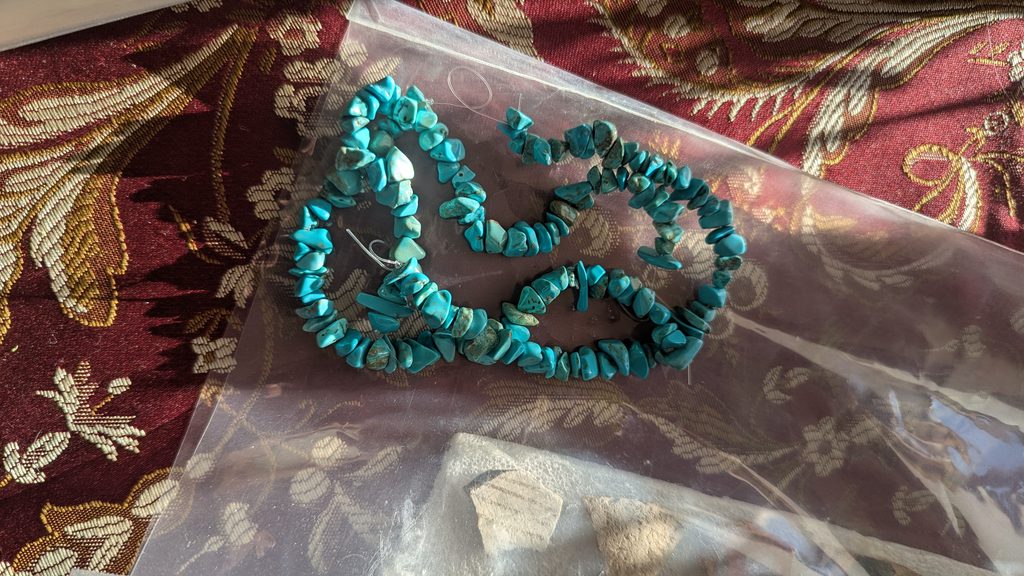
We found faux turquoise at a small zoo gift shop, which was expected enough. What we didn’t expect was that the same zoo kept a macaw behind the front desk — and that asking the staff about it turned into a conversation about macaw feathers in Puebloan trade, the same network we’d just spent an evening reading about.
Tobacco, twice, once we knew what to look for
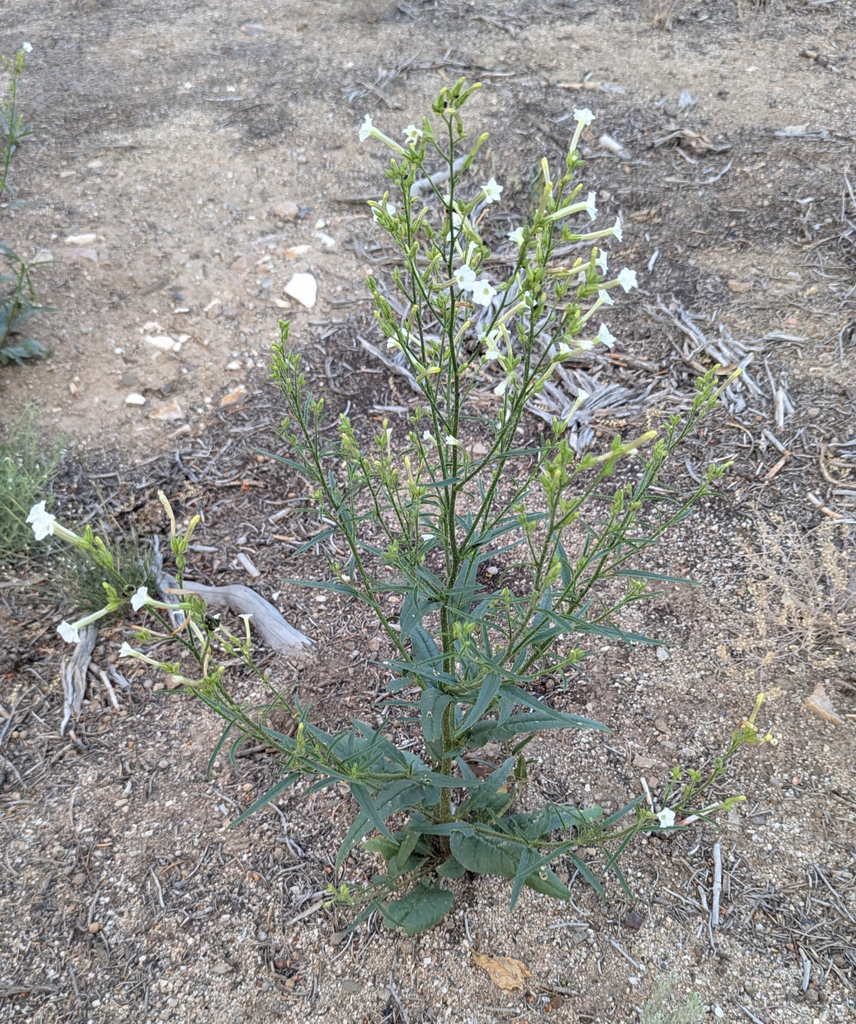
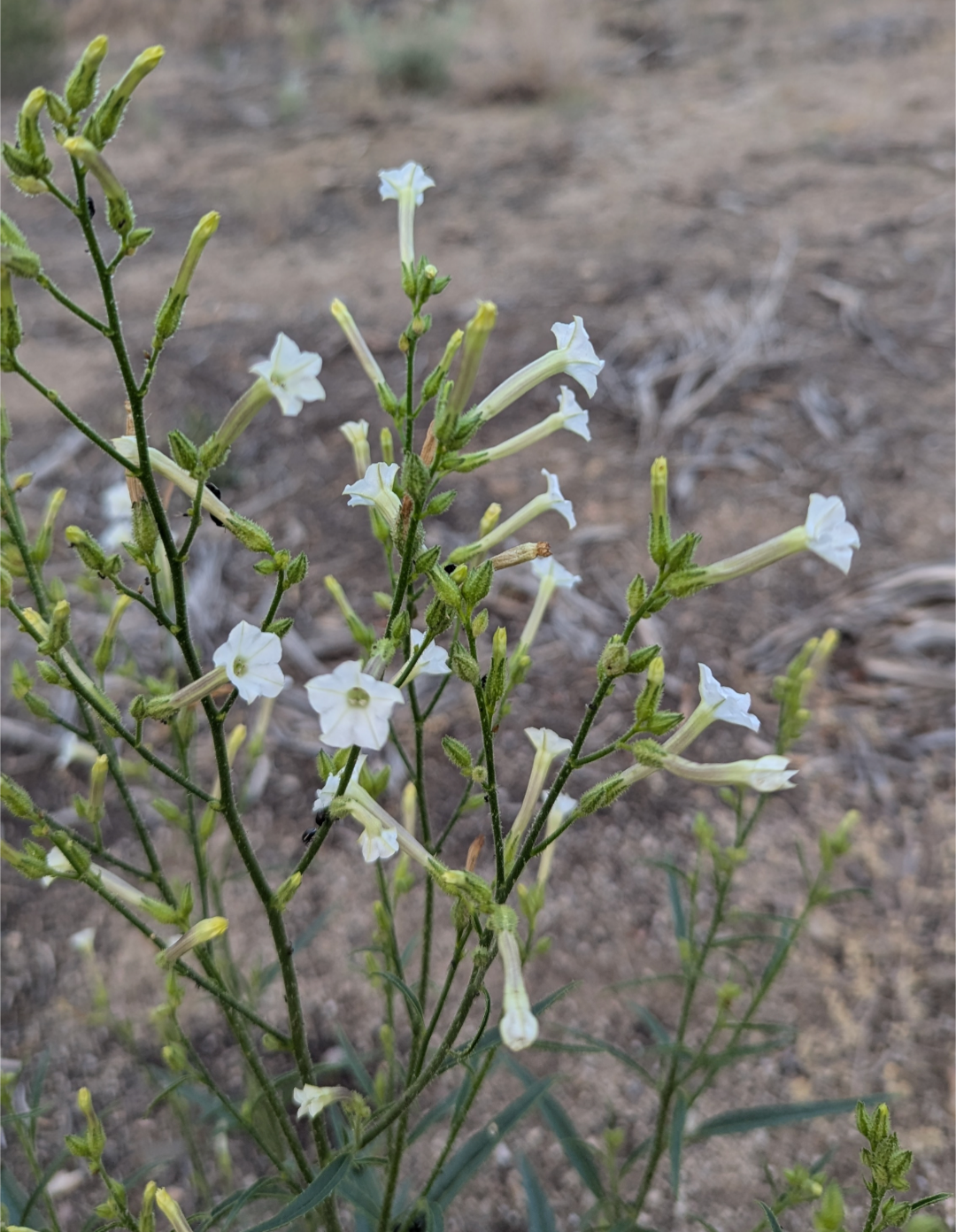
The research also had us reading about Puebloan tobacco use. Not long after, we noticed flowering tobacco in someone’s garden and clocked it immediately — and later, on a hike, spotted wild coyote tobacco growing on its own. Neither is the exact species the Puebloans grew, but both are close cousins, and neither would have registered as anything but a decorative or unremarkable plant a month earlier.
The finished pack: a museum you can hold
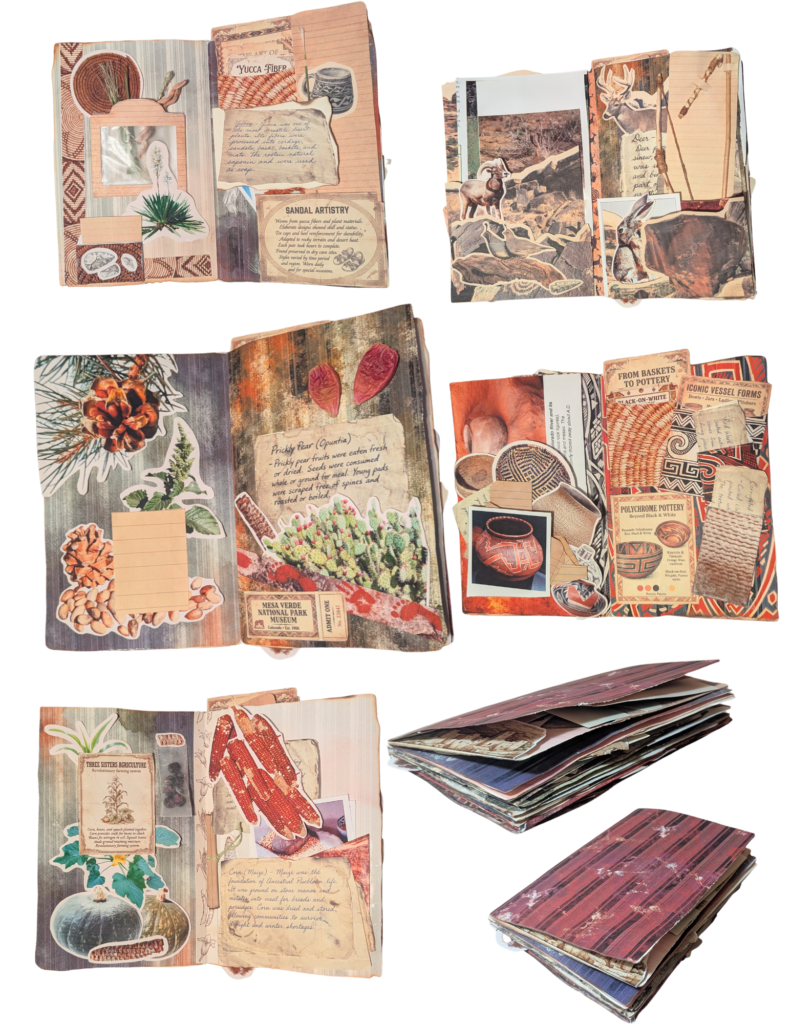
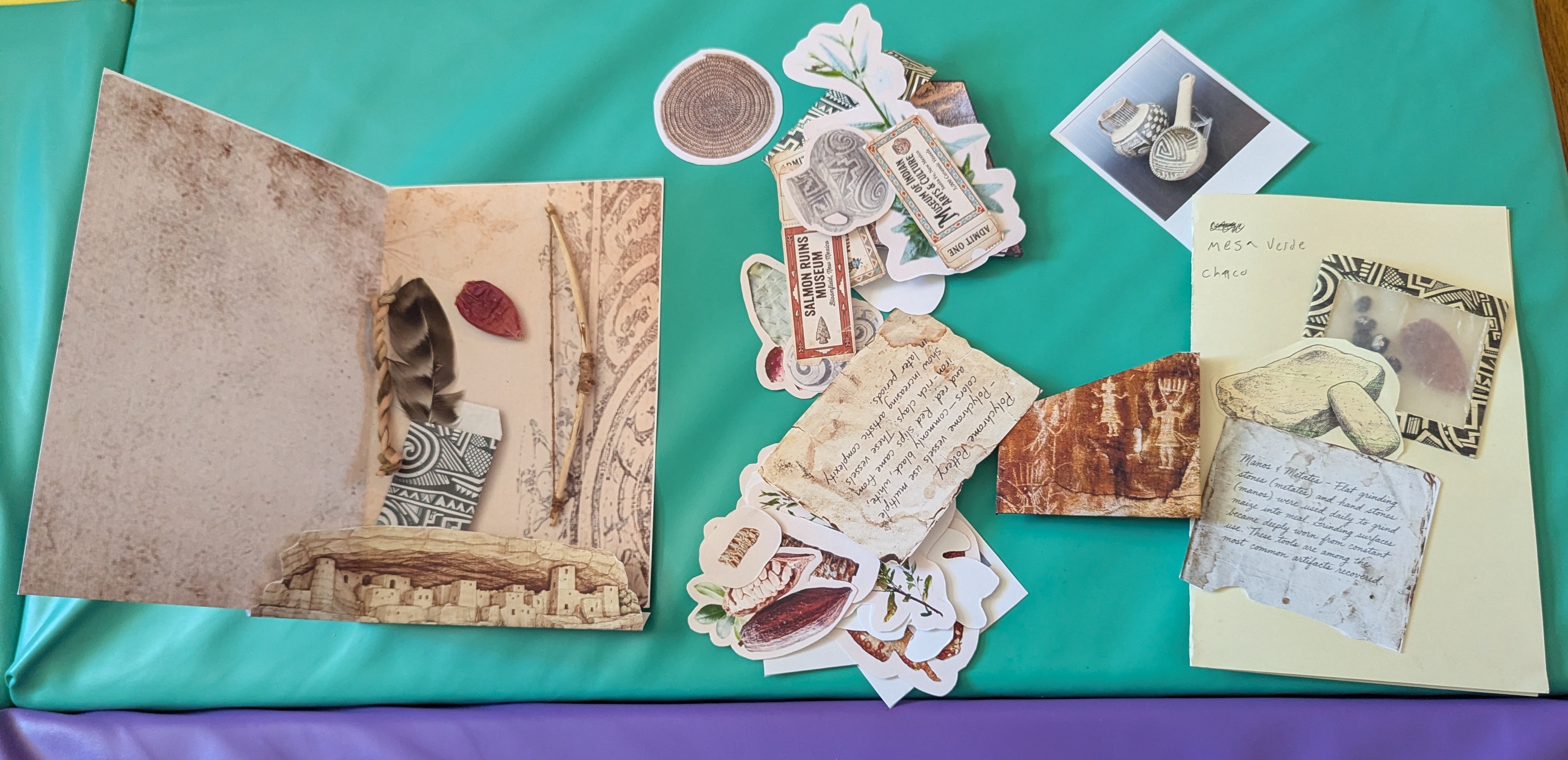
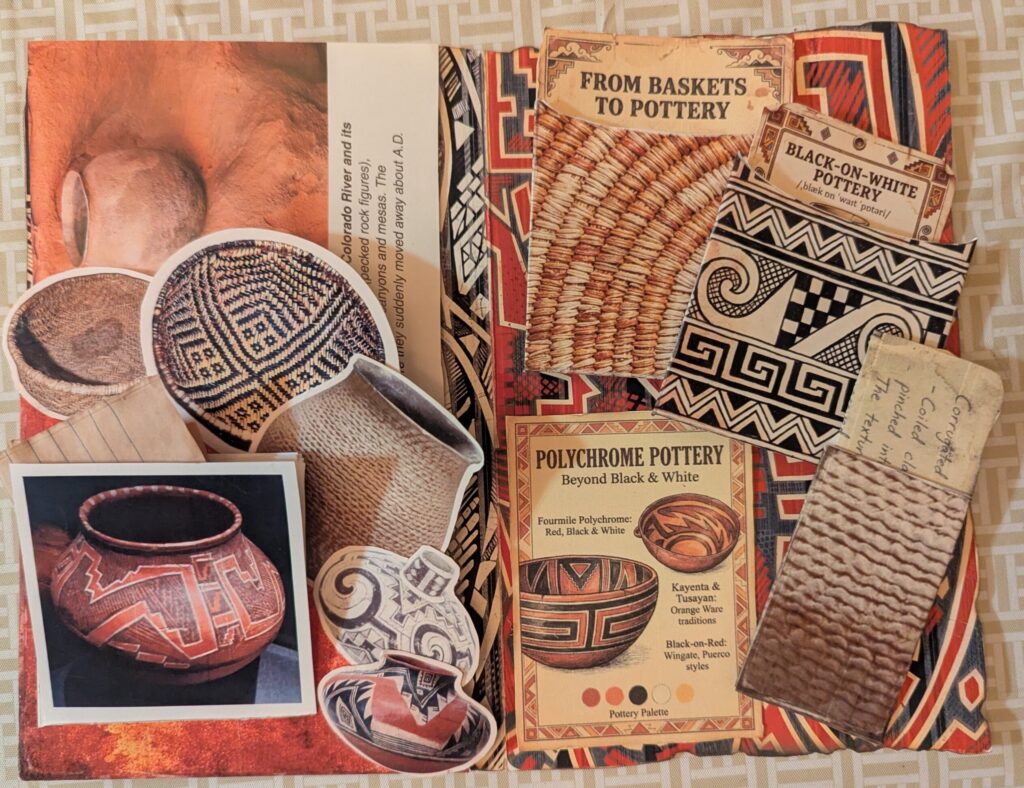
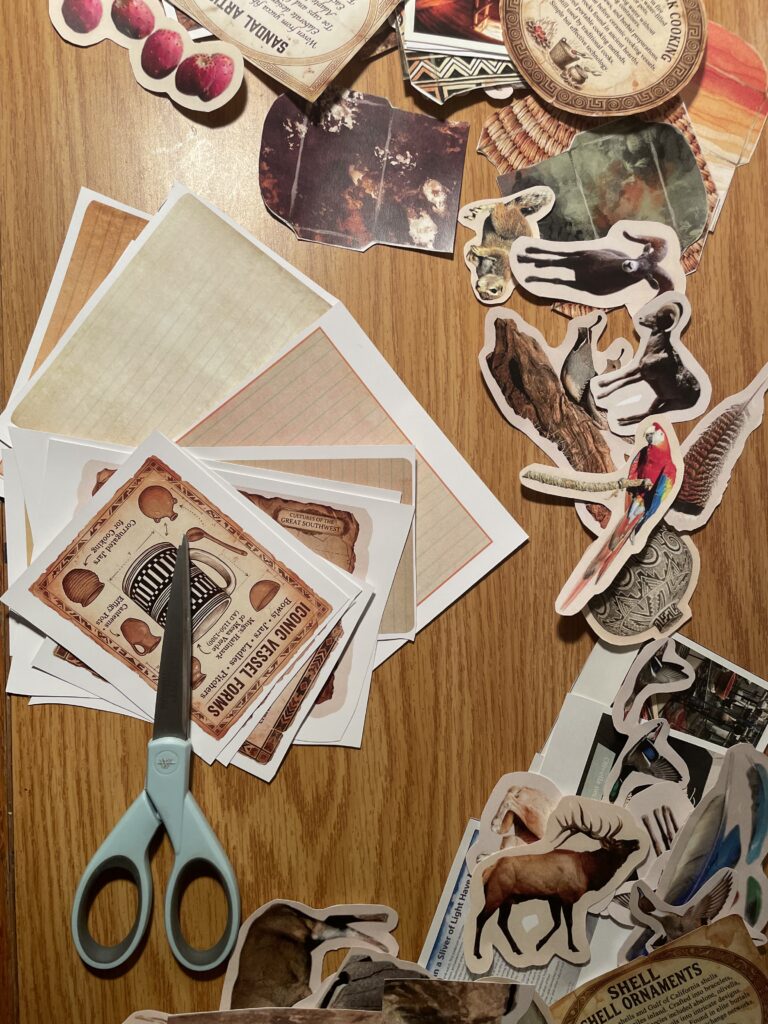
By the end, the pack wasn’t just cards and ephemera we’d designed — it was a small physical record of everything above. The real sherds from the thrift store are tucked into their own pocket. The obsidian and chert sit next to a card explaining what tool stone is and why it mattered. The shells we already owned are labeled with the trade routes they traveled along. There’s a sample of the yucca cordage we actually twisted, next to notes on dogbane and milkweed as backups the Puebloans likely used too. A shard of our own cracked pottery sits beside an explanation of why it cracked. It’s less a craft project at this point and more a museum shrunk down into a book — except instead of glass cases and placards, you get pockets you open yourself, specimens you can turn over in your hand, and captions in your own handwriting explaining what each one is and where it came from.
What this actually is
None of this was intentional. We didn’t set out to find real artifacts, tool stone in our own garden, or a crash course in thermal expansion — we set out to write a research pack. But research changes what you notice, and once you know what wild clay looks like, why a pot cracks, what yucca cordage is for, or which plants and trade goods show up in a 900-year-old economy, that knowledge doesn’t stay on the page. It follows you into gardens, hikes, thrift stores, and zoo gift shops. That’s the actual case for a world expander: it’s not a one-time craft project, it’s a lens you keep for a while afterward.