Turning the miles between stops into the curriculum itself.
Families who roadschool and worldschool face a problem that traditional homeschool curricula rarely solve: how do you build a real unit study around a place you’re only in for a week? Most curricula assume a fixed home, a bookshelf, and months to sit with one topic. Travel-based education needs something different — content that’s portable, self-contained, and tied to the actual ground under your kids’ feet.
That’s a gap World Expanders are nicely suited to address.
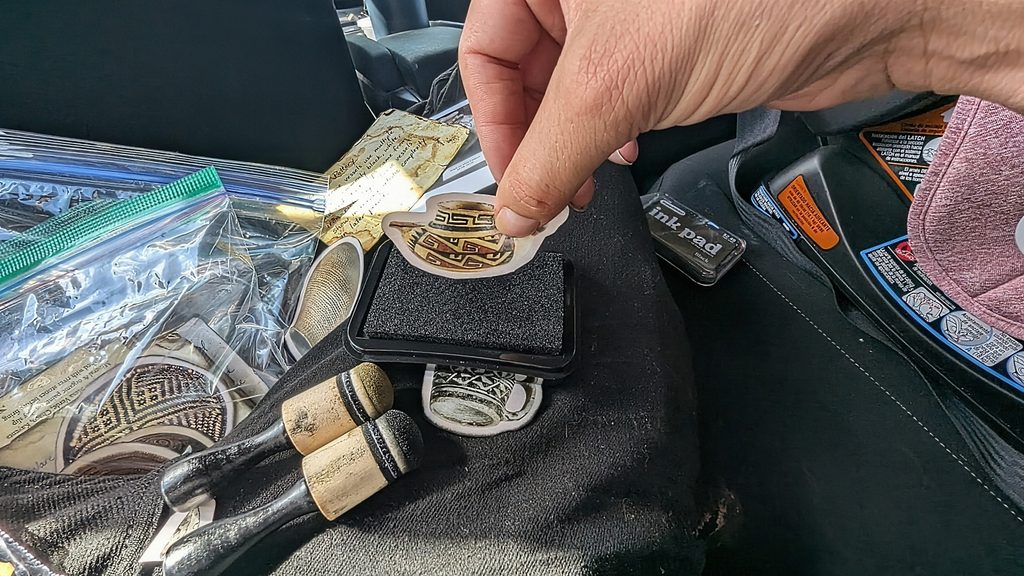
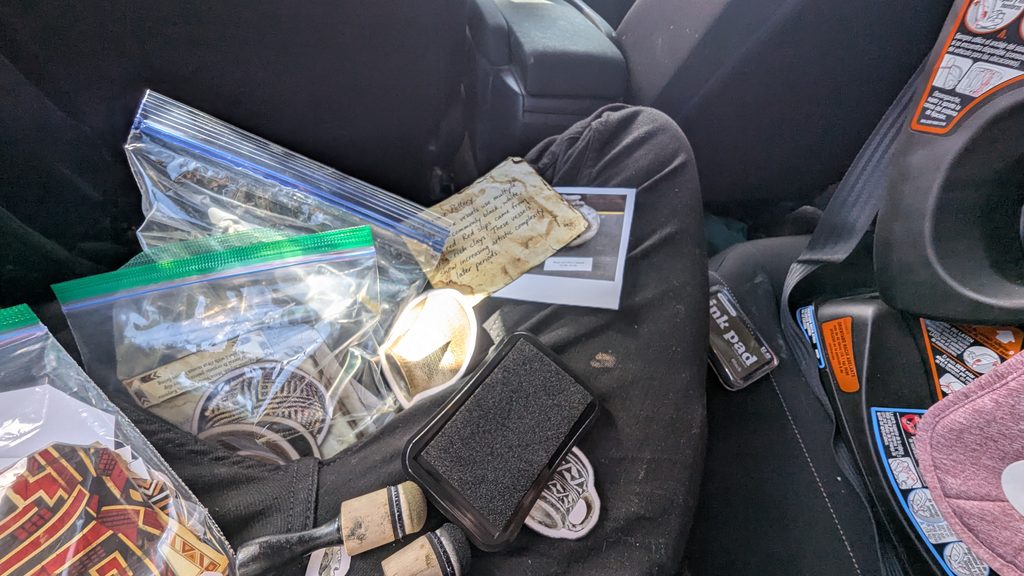
Learning tied to place, not just topic
A World Expander pack isn’t “here’s a unit on ecosystems” in the abstract — it’s the Mojave Desert, or the Pacific Northwest, or Ancestral Puebloan communities of the Southwest. For a family passing through that actual region, the pack turns the landscape outside the window into the curriculum. Kids aren’t reading about a desert; they’re in one, matching real yucca plants to the page, pressing a specimen into a pocket, cross-referencing a fact card against what they just saw at a pull-off. This is the same logic behind place-based education, a well-established pedagogy that treats the local environment as the primary teaching context rather than an afterthought to the “real” curriculum — the trip is the lesson, not a break from it.
Print before you leave, not after
Because World Expanders are sold as PDFs rather than pre-assembled physical journals, a family can prepare before ever hitting the road — download the pack, then print it at a library (most offer cheap or free printing) before departure, rather than hunting for a print shop mid-trip or hauling a home printer. No waiting on shipping to a rental or a campground mail drop, no carrying a shelf of curriculum in the trailer.
Dead time becomes work time
The format doesn’t require much! A glue stick, a clipboard, and some some scissors more than suffice. Fact cards can be cut out, read aloud, journaling prompts answered in pen on a lap desk, ephemera sorted into their respective topics – all doable in the backseat of a moving vehicle. For a family with hours between stops, that turns dead drive time into quiet, hands-busy work that’s otherwise hard to manufacture on the road. The messier assembly can wait for a stopped moment; the research, thinking and writing don’t have to.
Souvenirs become documentation, not clutter
Every road trip generates some drawer of miscellany — a pressed leaf, a ranger-station sticker, a rock that “meant something” at the time. Normally it gets thrown out or shoved in a box with no context. A World Expander pack gives that stuff a home: the specimen pocket or glassine envelope turns a found object into a labeled artifact, dated and tied to the place and topic. The souvenir stops being clutter and becomes evidence of what was learned and where — and later, just a genuinely good memory to flip back through.
A keepsake, not a stack of worksheets
There’s no shortage of printable travel journals on the market or school worksheets meant to be disposed of – generic prompted pages with room to record “favorite view” or “something I learned.” Or mindless penmanship practice with no real product to show for the effort.
What’s harder to find is that same tactile format built around actual region-specific content: ecology, history, and culture folded into the pockets and foldouts, not just left blank for the child to fill in from scratch. That combination — keepsake format plus real unit-study substance — is where World Expanders sit. Months later, “remember the desert book” is a real object kids will actually want to pull out, not a vague memory of a lesson plan.
Built for the way road-schooled kids actually learn
Roadschooling and worldschooling families consistently describe their approach as a blend of structure and child-led exploration, with local surroundings acting as the “springboard” for whatever comes next — not a fixed sequence to march through. World Expanders’ non-linear structure (specimen pockets, interactive spreads, fact cards explored in any order) matches that instinct better than a textbook does. There’s no wrong order to work through a pack, which suits a family whose schedule is dictated by weather, border crossings, or how long they linger somewhere they love.
One pack, multiple ages
On the road you usually can’t run separate curricula for a 6-year-old and a 10-year-old. The mix of simple sorting and coloring pages alongside denser fact cards lets kids at different levels work from the same material without a second curriculum purchase.
A route becomes a comparison, not just a series of stops
If a family works through more than one pack on a single trip — the Mojave, then the Pacific Northwest a few weeks later — the shared format lets kids directly compare two ecosystems or two peoples, since every pack asks similar kinds of questions in the same layout. That turns a string of stops into an actual comparative curriculum, not just a set of one-off lessons.
Less trip-planning homework
Each pack points toward nearby museums, sites, and resources for its region, so a parent isn’t separately researching “what’s educational near where we’re stopping” from scratch at every leg of the trip.
Documentation that travels well, wherever you need it
Homeschool documentation requirements vary enormously by state — some ask for nothing, some want a reviewed portfolio, some want standardized test scores instead. Where a portfolio or work samples do matter, a completed World Expander pack is real evidence: dated, tied to a specific place, with a specimen collected and notes written by the child’s own hand. It’s not just “we went somewhere” — it’s a documented unit, ready to be part of a larger record whatever a family’s state happens to require.
World Expanders turn the space between destinations into the classroom itself — no shelf of curriculum required, just a printed pack and whatever the road puts in front of you.